Leo Gamboa · Monkey Mind Studio
By Leo Gamboa · Monkey Mind Studio
Full disclosure: Banana Republic is my favorite clothing brand. Has been for years.
Not just because of the clothes — because of what the brand represents when it's firing on all cylinders. A sense of adventure. Premium without being pretentious. The kind of style that says you've been somewhere and you're going somewhere.
But I'm not here to just praise them. Because Banana Republic has also made some of the most instructive brand mistakes in retail history. And as a marketer, I can't ignore that.
This is an honest case study.
Act 1: The Golden Era — When Banana Republic Was a World, Not a Store
Banana Republic was founded in 1978 in Mill Valley, California by Mel and Patricia Ziegler. Mel was a journalist. Patricia was an illustrator. And together they created something that had never really existed before — a brand built entirely around a story.
Their stores had elephant-tusk door handles, live tropical foliage, army jeeps, and 17-foot fiberglass giraffes. Their catalogs featured hand-drawn sketches, handwritten notes, and fictional explorer backstories for each garment. They hired real writers — journalists, novelists — to give each piece a life.
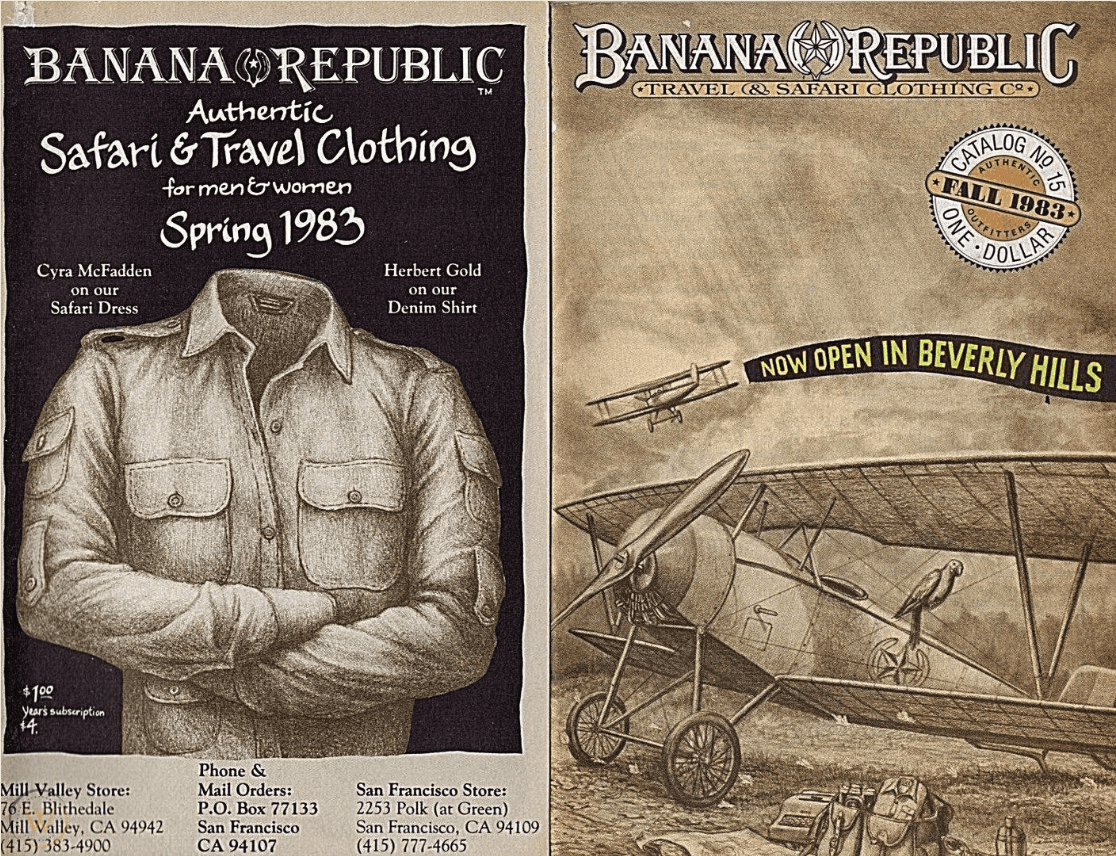
This wasn't a clothing store. It was a world you could step into.
And it worked. People didn't just buy clothes — they bought into an identity. The adventurer. The explorer. The person who went places and needed gear that could keep up.
Act 2: Gap Bought Them. And Slowly, the Story Disappeared.
In 1983, Gap Inc. acquired Banana Republic. At first, it worked — Gap's resources scaled the brand fast. More stores. More reach. More product.
But by 1988, the founders had lost creative control. And with them went everything that made the brand singular.
The illustrated catalogs disappeared. The adventure-themed stores were replaced with standard mall layouts. The explorer narrative was quietly shelved in favor of something more "mass appeal" — workwear, business casual, career clothing.
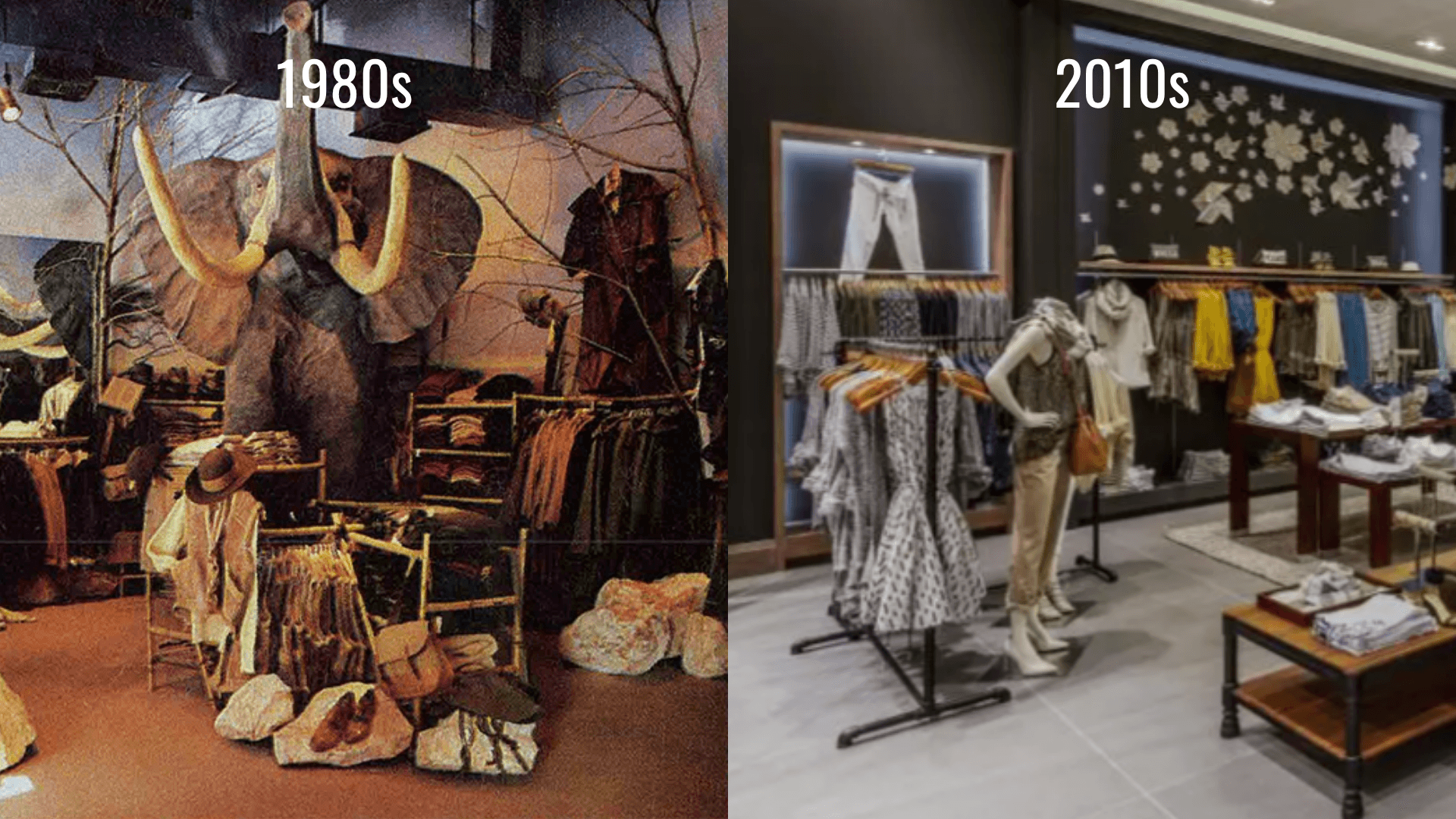
Banana Republic spent the next three decades repositioning over and over: safari to careerwear, careerwear to business casual, business casual to "modern utility." Each pivot tried to find the audience. None of them found the soul.
By the 2010s, Banana Republic was just another mall brand. Vaguely upscale. Vaguely professional. Completely forgettable.
The clothes weren't bad. The brand was just — empty.
This is what happens when scale becomes the priority over story.
Gap needed Banana Republic to serve a broader market. And in chasing broader, they lost the depth that made people care in the first place.
Act 3: The Comeback — Trying to Reclaim What Was Lost
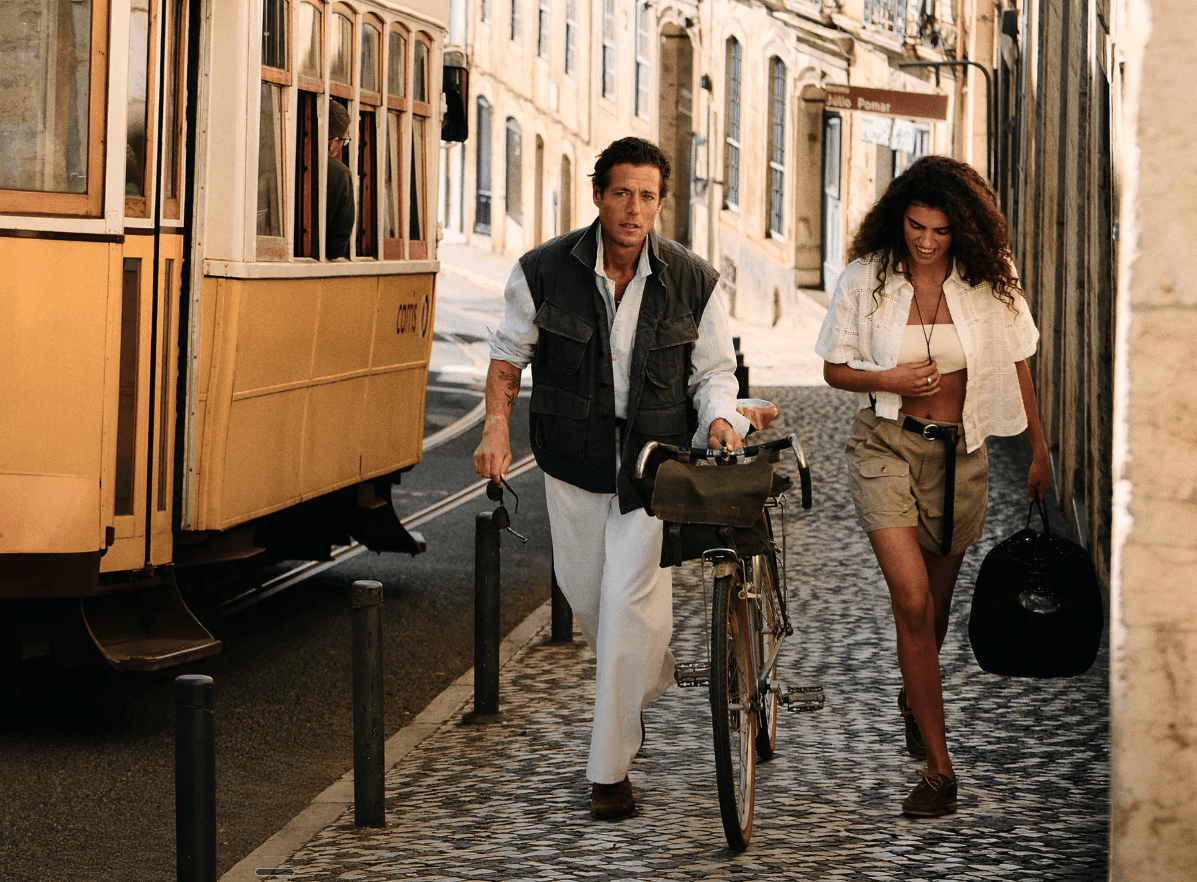
In 2021, Banana Republic launched "Imagined Worlds" — a rebranding campaign filmed in Marrakech featuring models on camels and vintage motorcycles. A direct, intentional return to the explorer aesthetic that built the brand.
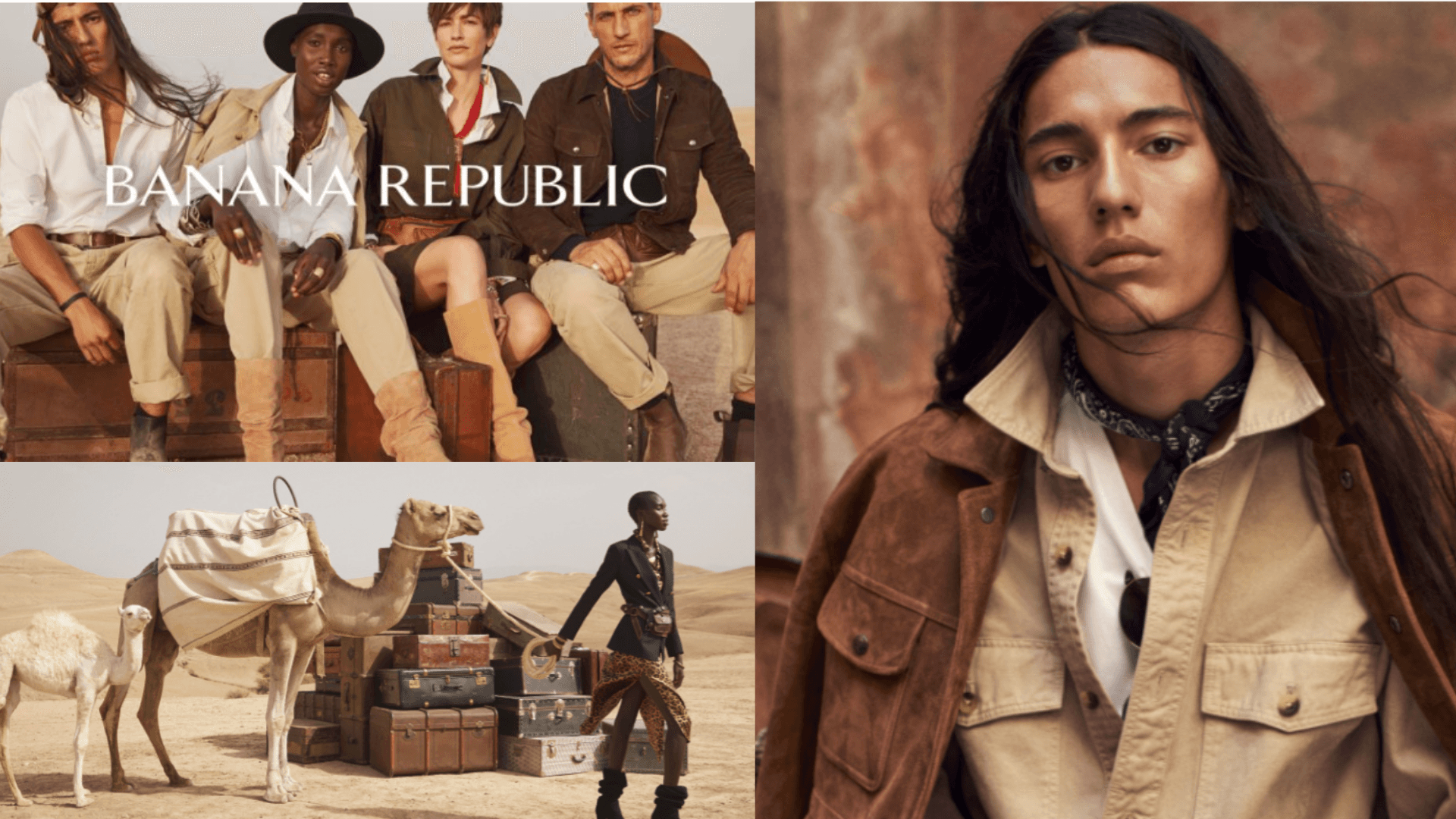
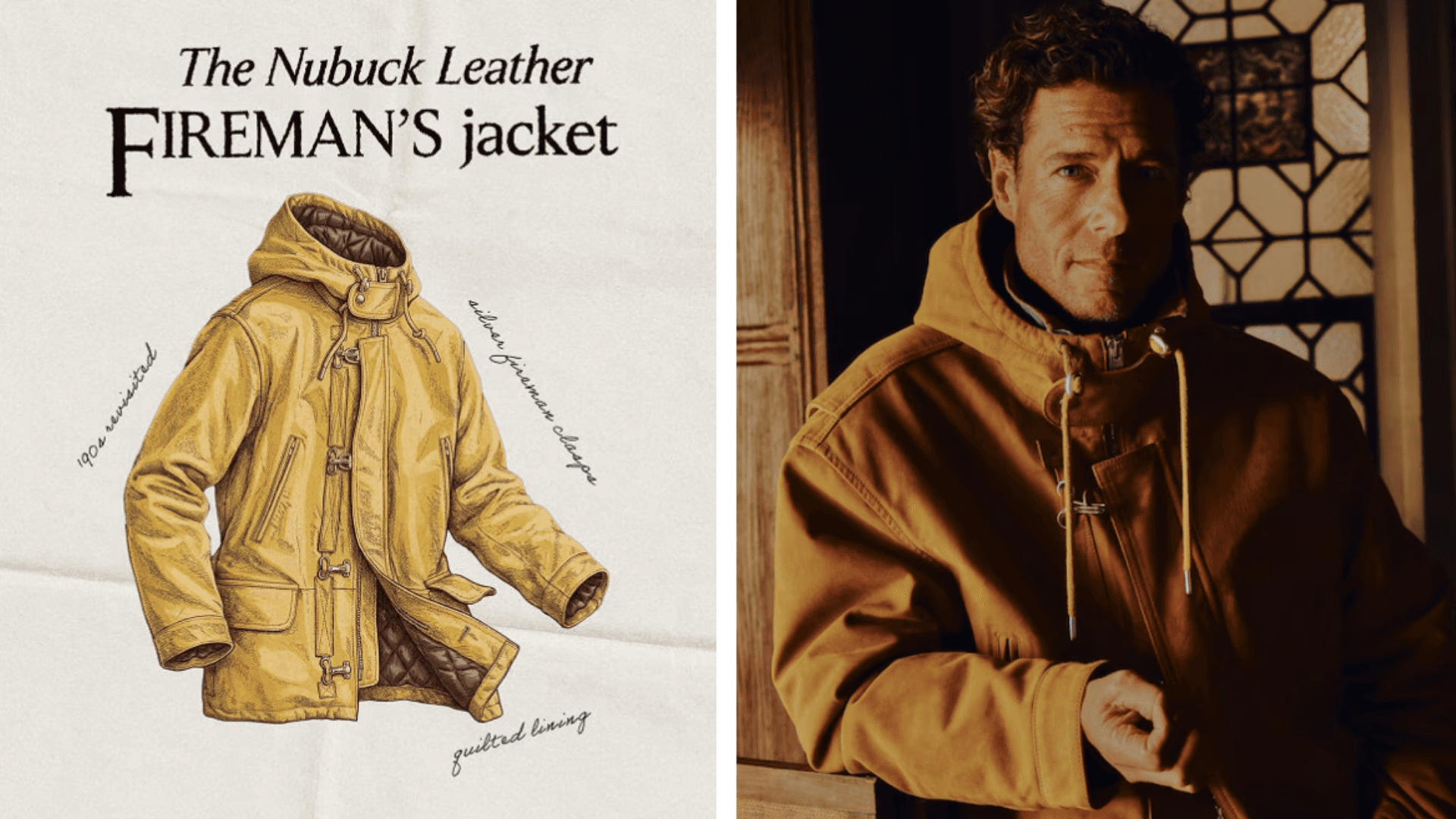
They followed it with the "Banana Republic Archive" — a curated collection of original apparel from the 70s, 80s, and 90s. They even acquired Abandoned Republic, a fan-built archive of original catalogs and store signage that a graphic designer had spent years collecting.
The message was clear: we remember who we were. We're coming back.
And honestly? It's working. Slowly. Comps are rising. The brand is finding its footing again.
But here's the honest critique — they're still not fully committed. They launched BR Baby. BR Athletics. BR Home. Every extension pulls the identity in a different direction. You can't be the premium explorer brand AND a home goods store AND an athletic line. Not without a thread strong enough to hold it all together.
The comeback is real. But the noise is still there.
The Marketing Lessons — What Every Brand Can Steal From This
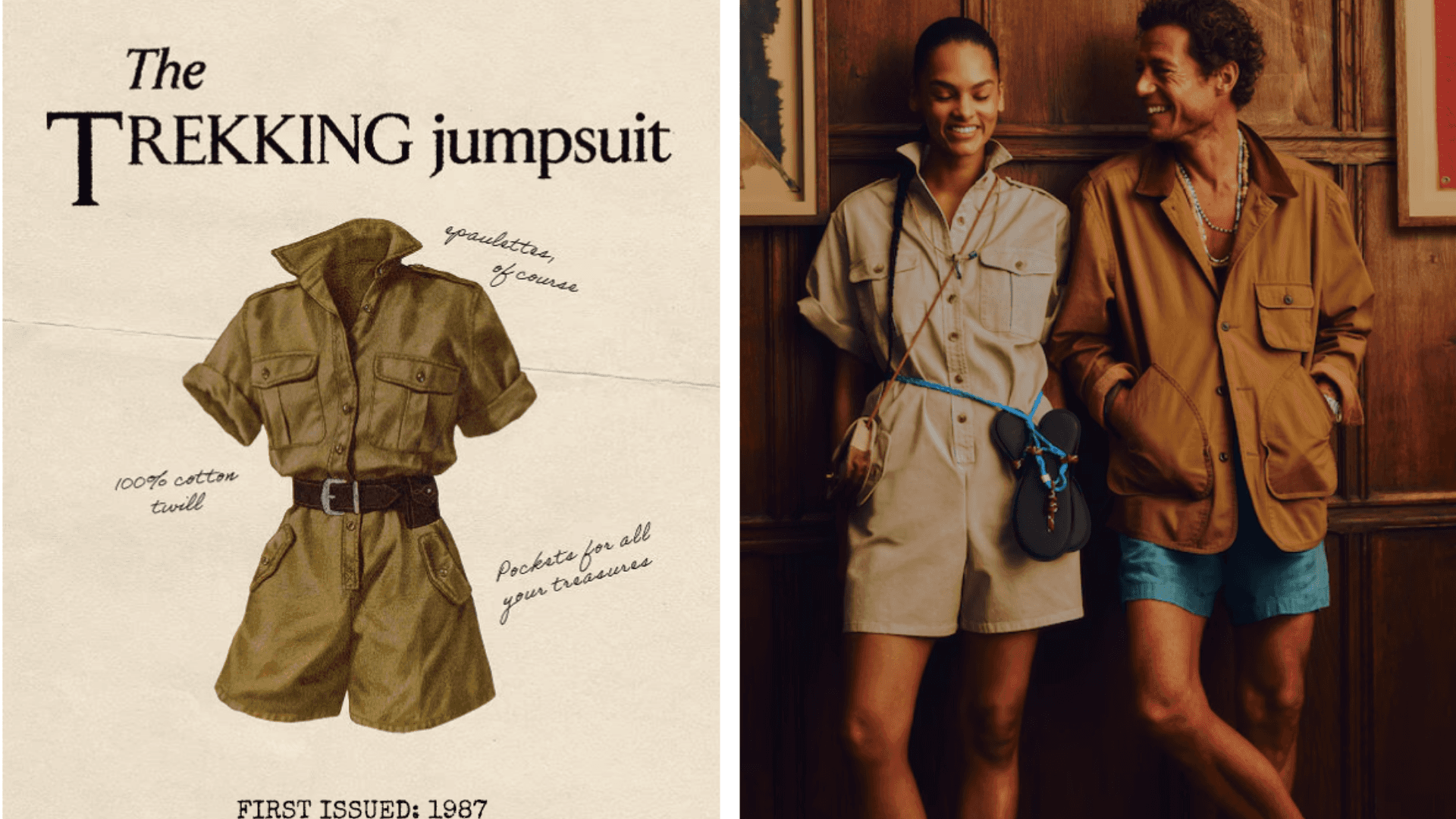
1. Your brand story is not a tagline — it's a world. Banana Republic at its peak wasn't selling clothes. It was selling the fantasy of being an explorer. Every element — the stores, the catalogs, the copy — reinforced one coherent world. That's what made it magnetic. That's what made people loyal.
2. Mass appeal is a trap. The moment Gap decided Banana Republic needed to be for everyone, it stopped being for anyone in particular. Broad appeal sounds like growth. It's actually dilution. The brands that last are the ones that choose their people and go deep — not wide.
3. Losing your story costs more than you think. It took Banana Republic 30+ years and a full rebrand to start recovering from abandoning their identity. Rebuilding brand trust is exponentially harder than maintaining it. Guard your story like it's your most valuable asset — because it is.
4. Heritage is a competitive advantage. Most brands are desperate to look new. Banana Republic's most powerful move right now is leaning into being old. The Archive collection works because authenticity is rare. Your history, done right, is a differentiator.
Why I Still Love This Brand
Because even through all the mess — the generic mall years, the failed pivots, the brand identity crisis — the bones were always good. The original vision was strong enough to survive three decades of corporate dilution and still be worth reviving.
That's rare. And it's a testament to how powerful a well-built brand story is when it actually means something.
The lesson for your business isn't to build a safari brand. It's to build something with that kind of depth — a clear world, a clear story, a clear reason someone chooses you over everyone else.
Control the story. Or someone else will.
Want to build a brand that actually means something? Let's talk →
Follow us on Instagram @monkeymind.studio
Monkey Mind Studio is a Miami-based boutique marketing agency helping founders and small businesses clarify their message and convert attention into leads.
Frequently Asked Questions
What happened to the original Banana Republic brand? Banana Republic was founded in 1978 as an adventure and safari-themed brand with illustrated catalogs and explorer-themed stores. After Gap Inc. acquired it in 1983 and the founders lost creative control by 1988, the brand shifted toward generic workwear and mass-market positioning, losing its original identity over several decades.
Is Banana Republic trying to rebrand? Yes. Since 2021, Banana Republic has been actively working to return to its safari and adventure heritage through campaigns like "Imagined Worlds," the Banana Republic Archive collection, and the acquisition of a fan-built catalog archive called Abandoned Republic.
What is the Banana Republic Archive? The Banana Republic Archive is a curated collection of original apparel from the brand's 70s, 80s and 90s era, revived as limited drops. It's part of the brand's strategy to reconnect with its adventure and explorer heritage.
What does Banana Republic teach us about brand identity? Banana Republic is a case study in what happens when a brand abandons its story for mass appeal — and how difficult it is to rebuild once that story is lost. The key lesson: brand identity is not a tagline or a logo, it's the entire world you build around what you sell. Protect it.
What is brand dilution? Brand dilution happens when a brand expands beyond its core identity — through too many product lines, too broad a target audience, or inconsistent messaging — to the point where its original meaning is lost. Banana Republic's post-Gap era is a textbook example.