Leo Gamboa · Monkey Mind Studio
Premium Mediocre: Why We Pay More for the Illusion of Luxury
By Leo Gamboa · Monkey Mind Studio
Let's start with a definition.
Luxury, by its truest meaning, is something not easily accessible to the majority of the population. Scarcity. Craft. Exclusivity. The thing most people cannot have.
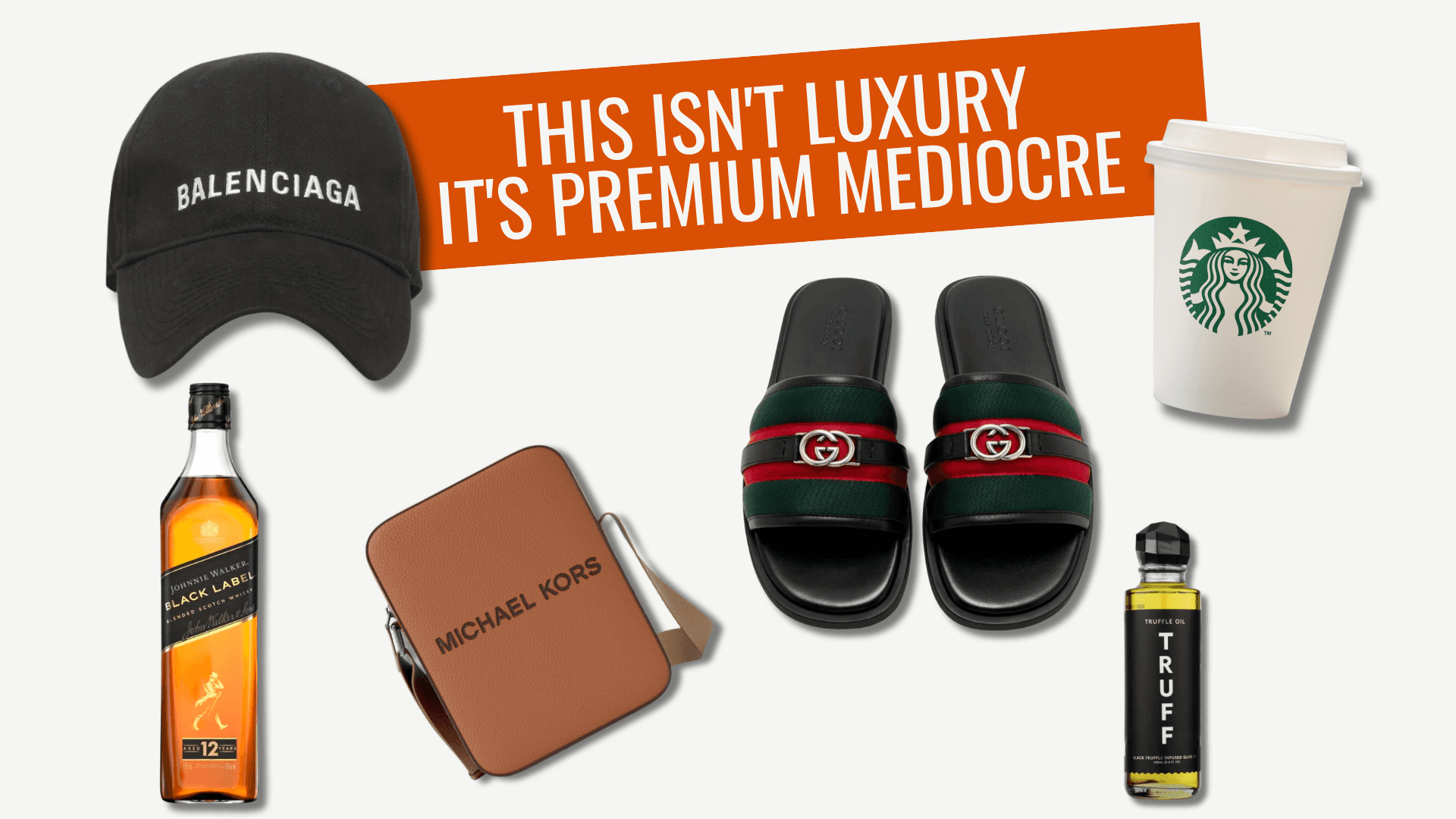
Premium mediocre is something else entirely. It's the art of making the ordinary feel elevated — just enough to justify a higher price tag, not enough to actually be better. It's the velvet rope on a dive bar. The Italian name on a $8 coffee. The designer logo on a $10 baseball cap.
The concept was coined by writer Venkatesh Rao: "Mediocre with just an irrelevant touch of premium, not enough to ruin the delicious essential mediocrity."
And once you learn to see it — you see it everywhere.
The Entry-Level Luxury Trap
Let's start at the top, because this is where premium mediocre gets most interesting.
Take Loro Piana. One of the most prestigious textile and clothing brands in the world. A coat runs $3,000 to $4,000. A cashmere sweater, $2,000. The core product is genuinely exceptional — rare fibers, Italian craftsmanship, limited production. That is actual luxury.
But then there's the hat. The scarf. The cap. $300 to $400. Suddenly "accessible."
And that's exactly the point. These accessories exist not because Loro Piana wants to make hats — they exist to let people buy into the brand at a fraction of the real price. The logo is the product. The hat is just the delivery vehicle.
You're not buying a scarf. You're buying the feeling of owning Loro Piana. It's the brand's most profitable illusion — and millions of people buy it willingly.
This pattern repeats across fashion:
The Louis Vuitton coated canvas bag (not leather — coated canvas with LV print)
The Prada nylon backpack
The Balenciaga baseball cap — a $10 hat with a logo that now costs $300
Gucci headbands and plastic sandals that top bestseller lists
Michael Kors bags — positioned as luxury, priced as accessible, made for mass production
The major purveyors of premium mediocre fashion built highly successful businesses by marketing goods in the mid-hundreds-dollar range with the oxymoron "affordable luxury." What they're selling is not luxury — it's luxury dust sprinkled on top of mediocrity.
And the margins? Enormous. The entry-level product costs nearly the same to produce as the core product — but it sells at volume and with the full brand premium attached.
The Starbucks Effect: Italian Names for Average Coffee
$8 for a Venti Caramel Macchiato.
Not because the coffee is exceptional. Because venti sounds Italian. Because the barista writes your name on the cup. Because there's a drive-through in every suburb in America and an app that lets you order ahead.
Starbucks' Italian names for drink sizes, and its original pumpkin spice lattes featuring a staggering absence of pumpkin in the preparation — actually all the coffee at Starbucks is premium mediocre.
The product is fine. Nobody walks out saying it was life-changing. But the experience — the ritual, the cup, the name, the vocabulary — makes it feel like a small daily luxury. That's the brand doing its job.
Starbucks didn't sell you coffee. They sold you a character in a lifestyle. The person who orders their coffee by its Italian name on the way to their 9-to-5.
That's premium mediocre at its most successful — and most honest.
Truffle Oil: The Most Premium Mediocre Ingredient in the World
Here's a fun one.
Truffle oil is on menus everywhere. "Truffle fries." "Truffle risotto." "Truffle aioli." All of it sounds decadent, earthy, expensive.
Most truffle oil contains zero actual truffles.
No actual truffles are harmed in the making of "truffle" oil. The flavor comes from a synthetic compound — 2,4-dithiapentane — that mimics the truffle aroma. It's a lab-created scent sold at a premium because the word "truffle" on a menu adds $4 to any dish and nobody asks questions.
Real truffles are one of the most expensive ingredients in the world. Truffle oil is one of the most successful marketing tricks in food history. The name does all the heavy lifting.
Premium Economy: First Class Adjacent, Economy Reality
You know the seat.
It's two inches wider than economy. The legroom is marginally better. The meal comes in a slightly nicer tray. The flight attendant smiles at you with slightly more energy.
Premium economy on domestic flights is one of the best examples of premium mediocre in practice — by dressing up something mediocre with a few extra touches, real and imagined, airlines play on people's aspirational drive to give them the illusion that they are purchasing into something elevated.
You are not in first class. You know you are not in first class. But you paid extra to not be fully in economy — and that distinction is enough.
The airline didn't improve the product. They created a middle tier that makes the bottom tier feel worse, and the top tier feel further out of reach. Masterclass in pricing psychology.
The Influencer Watch in Positano
Here's the one that stings a little.
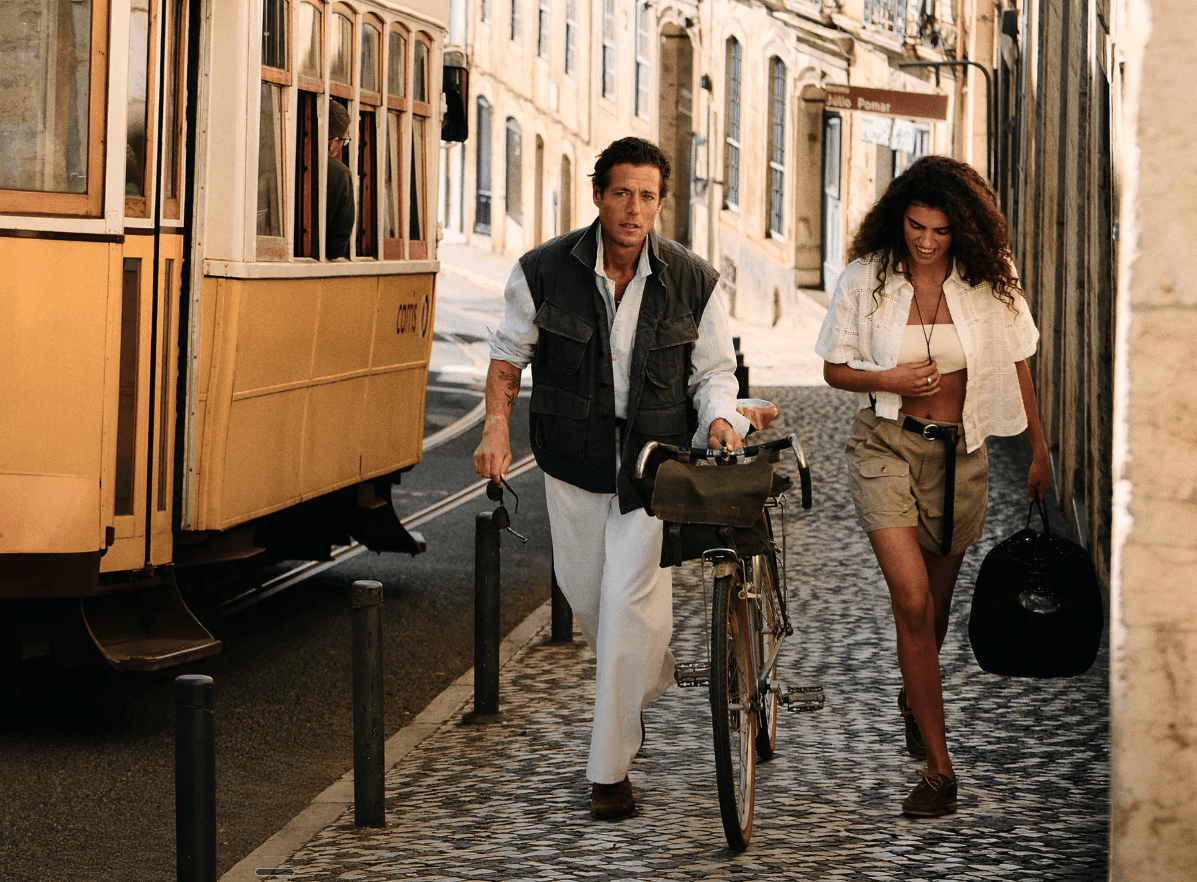
A $200 watch. Mass produced. Average movement. Nothing special about the craftsmanship. But an influencer wears it on a cliffside in Positano, blue sea in the background, golden light — and suddenly it looks like a luxury watch.
The location is luxury. The content is aspirational. The watch is not.
But the association sticks. And thousands of people buy the watch to buy the feeling of that photo — not the object itself.
This is premium mediocre at its most modern and most dangerous. Social media didn't create this phenomenon, but it turbocharged it. Now any $200 object can look like a $2,000 object with the right backdrop and the right lighting.
The question to ask: are you buying the product — or are you buying the photo?
Other Premium Mediocre Classics Worth Naming
Cruise ships — You visit 5 countries in 7 days. You spend 4 hours in each port, buy a magnet, eat at a buffet, and return to your floating hotel. You "traveled" without ever really being anywhere.
Glamping — Upscale camping with pre-set tents, hotel beds, and mood lighting. The experience of nature without the inconvenience of it. Which is to say — not really nature.
Johnnie Walker Black Label — The entry point to the Johnnie Walker range. Positioned as premium Scotch whisky. Fine for what it is. Not what the brand's marketing implies.
Whole Foods "Artisanal" — The word artisanal on a mass-produced item is doing a lot of work. Nothing at Whole Foods is truly artisanal. But the wooden shelves and the chalkboard signs make it feel like it was made this morning by someone named Marcus.
French branding for no reason — A product with French words, French typography, or a French-sounding name immediately feels more refined. Premium mediocrity includes "cheap, such as French-for-no-reason branding." Côte & Ciel. Maison anything. L'Occitane. The French language is doing marketing work.
Game of Thrones Season 8 — Eight seasons of genuinely exceptional storytelling, concluded in six rushed episodes that answered nothing and satisfied no one. Premium mediocre ending to an otherwise great product.
Miami — Yes. I said it. I live here. Miami looks like paradise in every Instagram post. The reality is traffic on I-95, humidity that destroys your wardrobe, and restaurant prices that require a second mortgage. Miami sells a dream. The product is complicated.
So What's Actually Wrong With Premium Mediocre?
Nothing — if you're buying it with full awareness.
The real problem is when you think you're buying luxury and you're actually buying the performance of it. When the status signal matters more than the object. When you spend real money on something that won't deliver what it's implying.
The test is simple: remove the logo, the name, the branding, the influencer — what is the product actually worth?
If the answer makes you uncomfortable, you've found the premium mediocre.
The Marketing Lesson
Premium mediocre is a business model — and a very profitable one. Understanding it doesn't mean avoiding it entirely. It means building with awareness.
If you're building a brand:
Don't fake premium — charge what the product is actually worth, and deliver what you charge
Aspiration is fine; deception is not — there's a line between good marketing and manufactured illusion
Entry-level products should represent your brand, not undermine it — a $300 hat should be as well-made as your $3,000 coat
And as a consumer: know what you're buying. Sometimes the Starbucks ritual is worth $8. Sometimes the truffle fries aren't worth $18. The difference is awareness.
Real luxury is rare, difficult, and deliberately made. Premium mediocre is everywhere, and it knows exactly what it's doing.
Want to build a brand that doesn't need smoke and mirrors? Let's talk →
Follow us on Instagram @monkeymind.studio for more marketing commentary that doesn't pull punches.
Monkey Mind Studio is a Miami-based boutique marketing agency. We help founders and small businesses clarify their message and convert attention into leads — with strategy built to last.
Frequently Asked Questions
What does "premium mediocre" mean? Premium mediocre describes products, services, or experiences that are designed to appear premium or luxurious while being fundamentally average in quality. The term was coined by writer Venkatesh Rao and applies to everything from airline seating tiers to luxury brand accessories to artisanal food marketing.
What is the difference between luxury and premium mediocre? True luxury is defined by genuine scarcity, exceptional craftsmanship, and limited accessibility — something most people cannot easily obtain. Premium mediocre mimics the signals of luxury (price, branding, aesthetics) without the substance. The logo is the product; the object is secondary.
What are examples of premium mediocre products? Classic examples include: Starbucks (Italian-named average coffee), premium economy airline seats, truffle oil (usually contains no real truffle), luxury brand entry-level accessories (hats, scarves, card holders), Balenciaga baseball caps, glamping, and artisanal food at mass-market grocery stores like Whole Foods.
Is premium mediocre always a bad thing? Not necessarily. Premium mediocre products can offer genuine enjoyment at accessible price points. The issue arises when consumers believe they're purchasing actual luxury when they're not, or when brands use premium signals to justify prices that don't reflect real value or quality.
Why do people buy premium mediocre products? Primarily for status signaling and aspiration. Buying a luxury brand accessory at an entry price allows people to participate in a brand's identity without affording its core products. Social media has amplified this — the right product in the right location can appear luxury regardless of what it actually is.
What is "entry-level luxury" in fashion? Entry-level luxury refers to the lower-priced accessories and small goods sold by high-end fashion houses — scarves, hats, card holders, sunglasses — designed to make the brand accessible to a wider audience. While the product carries the brand's name, it is typically made with different materials and processes than the core collection.